Short answer
Repair when damage is limited and the roof has years left. Replace when damage is widespread, the roof is near the end of its expected life, or repairs keep recurring. An inspection gives you a clear answer.
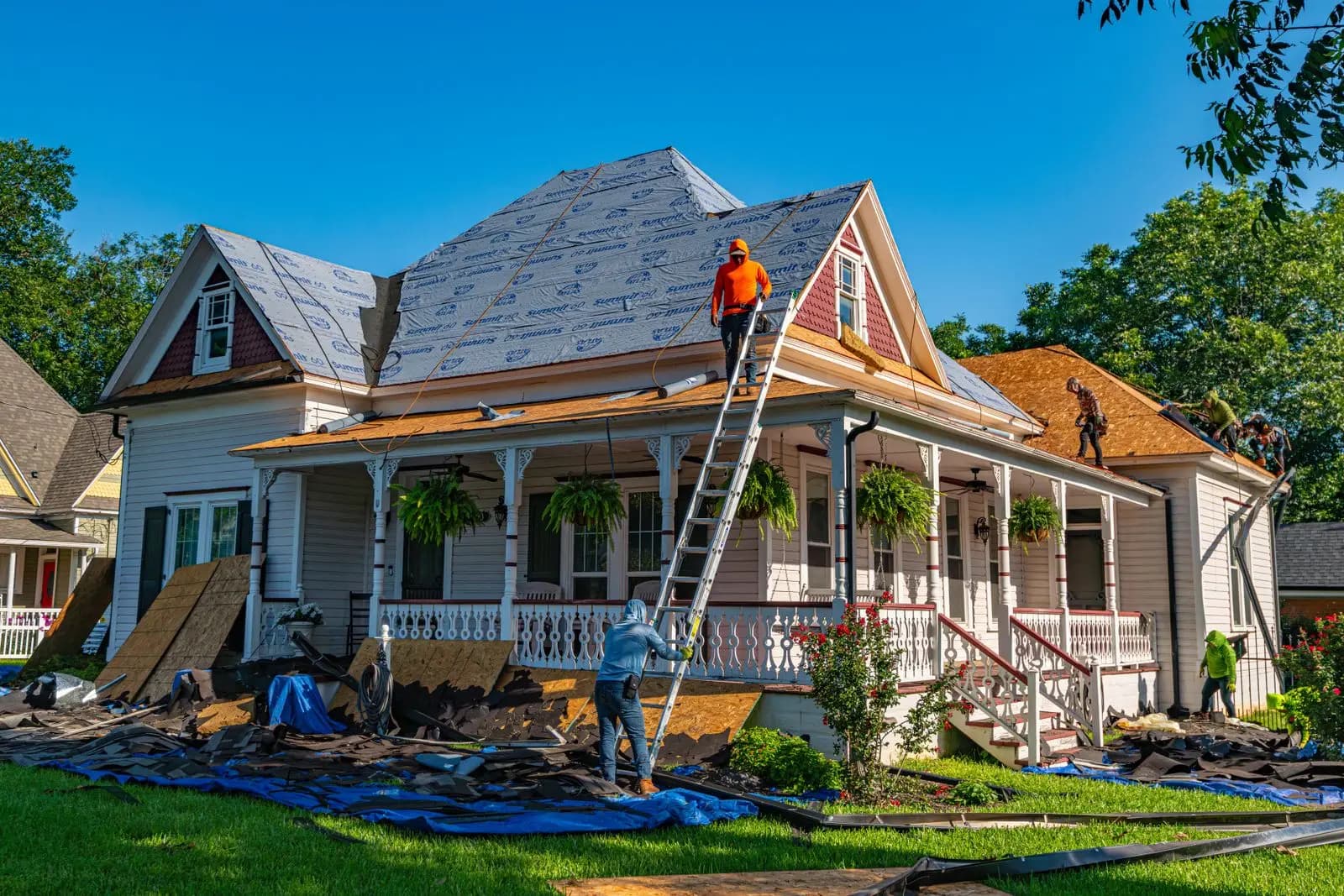
Signs a repair is enough
A few missing shingles after a wind gust, one leaking vent boot, or flashing that pulled loose are classic repair jobs on a roof that's otherwise in good shape — especially if the roof is under about 15 years old. A roofer can usually match the shingle color closely enough that the repair blends in. See roof repair.
Signs it's time to replace
Replacement makes sense when problems are spread across the roof.
- Curling, cracking or bald shingles on several slopes
- Multiple leaks or repeated repairs
- Sagging roof lines
- Widespread hail or wind damage
- Granule loss you can see collecting in the gutters
- Daylight visible through the roof boards in the attic
- The roof is at or past its expected life
How roof age changes the math
Most asphalt shingle roofs last roughly 20 to 30 years — architectural shingles generally outlast three-tabs — while metal, tile and slate last decades longer. If your asphalt roof is 22 years old and leaking in two places, money spent on repairs is buying time on a roof that's nearly done. If it's 8 years old with one leak, repair is the obvious call. See roof replacement.
The cost comparison, honestly
A repair costs a fraction of a replacement today — but repeated repairs add up, and each one is money you won't get back when the roof gets replaced anyway. A useful question to ask: will this repair buy at least a few more years? If the roofer hesitates, that tells you something. Ask for both options in writing, with the expected remaining life of each.
What a good inspection should tell you
An inspection should answer three questions: how old is this roof, how much life does it have left, and is the damage localized or systemic? It should include photos from the roof, the attic condition — ventilation and decking — and the state of the flashing, not just a price for one option.
When only part of the roof is damaged
Sometimes one slope takes the hail while the others are fine. Partial replacement is possible, but matching shingles is hard — colors and product lines change over the years — and mixing new and old sections can complicate warranties. Full replacement is more common, though a good roofer will explain the trade-offs for your specific roof.
Resale and insurance angles
If you're selling within a few years, buyers and their inspectors discount heavily for an aging roof. Some insurers also won't write or renew policies on roofs past a certain age — commonly around 15 to 20 years for asphalt, though it varies by company and state. A new roof can remove that friction entirely. Check with your agent before you decide.
Questions to ask the contractor
Ask these before you sign anything:
- What would you do if this were your house — and why?
- Can you quote both repair and replacement so I can compare?
- What happens to the decking, flashing and ventilation in each option?
- What warranties come with each, and what voids them?
Questions
How long does an asphalt roof last?
Commonly around 20 to 30 years, depending on the product, ventilation and climate. Hail and heat shorten it.
Can I replace just half the roof?
Sometimes, but matching and warranty issues make full replacement more common.
Will my insurance pay for a full replacement?
Only if the damage is from a covered event like hail or wind and the adjuster's scope calls for replacement. Insurers don't pay to replace a roof that's simply old — our insurance claim guide explains how the process works.
Can I put new shingles over the old ones?
Many codes allow one layer over the existing roof, but a tear-off lets the roofer inspect and replace damaged decking, install fresh underlayment and flashing, and usually lasts longer. Most roofers recommend the tear-off.
Should I switch roofing materials when I replace?
It depends on your climate, budget and house structure. Metal lasts longer and handles hail and snow well but costs more upfront; tile is heavy and may need structural checks. An honest roofer will price both and explain the trade-offs rather than pushing one.
This guide is general information, not professional, legal or insurance advice. Follow your insurer's instructions and local codes, and put safety first.