Gutter installation and repair
Gutters collect roof runoff and move it away from your fascia, siding and foundation. Repairs fix sagging, leaking seams and bad pitch; replacement usually means seamless aluminum gutters sized for your roof.
- Fast callback on emergency requests
- Independent local roofers that serve your ZIP
- Photos and a written report for your insurer
- Free to call; the roofer quotes before work starts
Gutters that overflow or pull away from the house push water behind the fascia and into the roof edge, rotting wood and staining siding. Downspouts that dump next to the foundation send water into basements and crawl spaces.
Gutters are often replaced with a roof, because the drip edge and fascia are exposed at the same time. See roof replacement. Hail can also dent gutters, which helps document a hail claim.
Most gutter problems come down to three things: pitch, capacity and attachment. Gutters pitched wrong hold water and breed mosquitoes; undersized gutters overflow in real storms; and spikes or screws pulling from rotted fascia won't hold no matter how the gutter is adjusted. A contractor should check all three, not just hang new metal.
Gutter Installation and Repair at a glance
- What it is
- Gutters collect roof runoff and move it away from your fascia, siding and foundation.
- Urgency
- Soon. Start within a day or two.
- Typical steps
- Assess → Repair fascia → Install → Set drainage → Test
- Who does it
- An independent, local roofing contractor
Signs
When you need gutter installation and repair
- Water spilling over the gutter edge in rain
- Gutters sagging or pulling away from the fascia
- Leaking seams or corners
- Peeling paint or rot on fascia boards
- Soil washing out under downspouts
- Water dripping behind the gutter, against the house
- Gutters full of standing water days after rain
- Basement or crawl space dampness near downspouts
- Rust spots or holes in steel gutters
- Landscaping eroding in one channel below the eave
Process
What the crew does
- 1
Assess
Size, pitch, fascia condition and downspout placement are checked.
- 2
Repair fascia
Rotted fascia is replaced before new gutters go up.
- 3
Install
Gutters are hung with hidden hangers at the correct pitch, with downspouts and extensions.
- 4
Set drainage
Downspouts are placed and extended so water leaves the foundation.
- 5
Test
Water is run through to confirm flow.
Cost
What affects the price
Every job is scoped on site. These are the factors that move the number.
- Linear feet and number of stories
- Seamless versus sectional gutters
- Gutter size and material
- Fascia repair and guards
- Number of downspouts and corner work
- Accessibility around landscaping and decks
- Color-matched or specialty materials like copper
Before the crew arrives
What you can do, and when to stop
Safe to do
- Clean gutters twice a year from a stable ladder
- Add downspout extensions away from the foundation
- Flush gutters with a hose to check flow
- Tighten a loose gutter spike or bracket
- Keep the ground sloped away from the foundation
Stop and call if
- Two-story work without proper equipment
- Fascia or roof-edge rot
- Rehanging long gutter runs alone
- Anything requiring walking on the roof
- Downspouts that tie into underground drains you can't inspect
FAQ
Gutter Installation and Repair questions
Are gutter guards worth it?
They reduce cleaning in heavily wooded areas, but no guard is maintenance-free. Quality and fit matter more than the type.
Seamless or sectional gutters?
Seamless gutters are formed on site to length, with fewer joints to leak. They're the common choice for replacement.
What size gutters do I need?
Most homes use 5-inch gutters with 2x3 downspouts; larger roofs and heavy-rain areas may need 6-inch gutters and bigger downspouts. The roofer sizes them to your roof area and pitch.
How many downspouts should a house have?
Roughly one per 30 to 40 feet of gutter, but roof valleys that concentrate water may need more. Too few downspouts is a common cause of overflow.
Should gutters be replaced with the roof?
Often yes. The drip edge and fascia are already exposed, the crew is set up, and you avoid paying for two installations. Old gutters rarely survive a tear-off unscathed.
Why do my gutters drip behind them?
Usually a missing or short drip edge lets water run behind the gutter, or the gutter was hung too low. It's a flashing problem, not always a gutter problem.
How long do aluminum gutters last?
Well-installed aluminum gutters commonly last around two decades, longer in mild climates. What fails first is usually the hangers, seams or fascia behind them.
Can new gutters be matched to my trim color?
Yes. Seamless gutters come in many factory colors, and the coil can often be matched closely to fascia or trim.
Do I need heat cable in gutters?
In ice-dam country, heat cables can keep a drainage path open, but they're a treatment for the symptom. Attic insulation, ventilation and air sealing are the real fix.
Gutter Installation and Repair by state
Gutter Installation and Repair in popular cities
Related
Related services
Roof Replacement
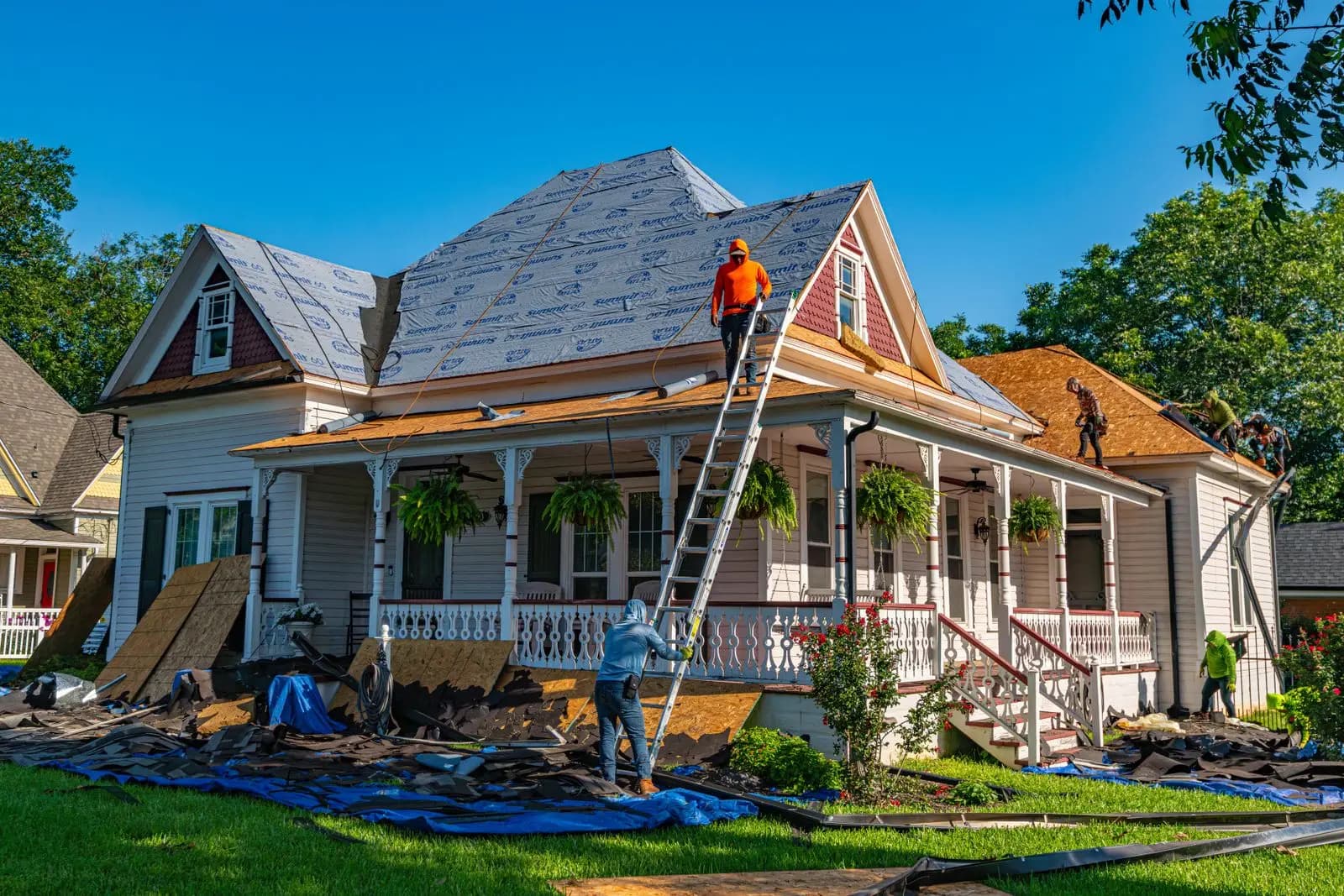
Roof replacement removes the old roofing down to the decking, repairs damaged decking, and installs new underlayment, flashing, ventilation and roofing.
Learn more
Roof Leak Repair
Roof leak repair means tracing water back to where it actually enters, usually flashing, a vent boot, a damaged shingle or a valley, and sealing or replacing that part.
Learn more
Hail Damage Roof Repair
Hail damage shows up as bruises or dents in shingles, loose granules, cracked vents and dented metal.
Learn moreDeep dives
Gutter Installation and Repair specialties
One gutter installation and repair job, in full detail: what it covers, when it's the right fix, and when something else is.
Seamless Gutter Installation
Seamless gutters are extruded on site from a single coil of aluminum to the exact length of each run, so there are no joints along the straight sections to leak.
Learn moreGutter Guard Installation
Gutter guards cover the gutter opening so leaves and debris wash off while rainwater flows through.
Learn moreRoof leaking or storm-damaged?
Stop the source if you can, then call. We'll connect you with a local roofing contractor that serves your ZIP.
Fast callback on emergency requests