Short answer
An active leak, a hole in the roof, or missing shingles after a storm is an emergency: contain the water inside, photograph the damage, and call a roofer for tarping or a temporary seal. The permanent repair waits for dry weather and a proper inspection — the emergency visit is about stopping further damage tonight.
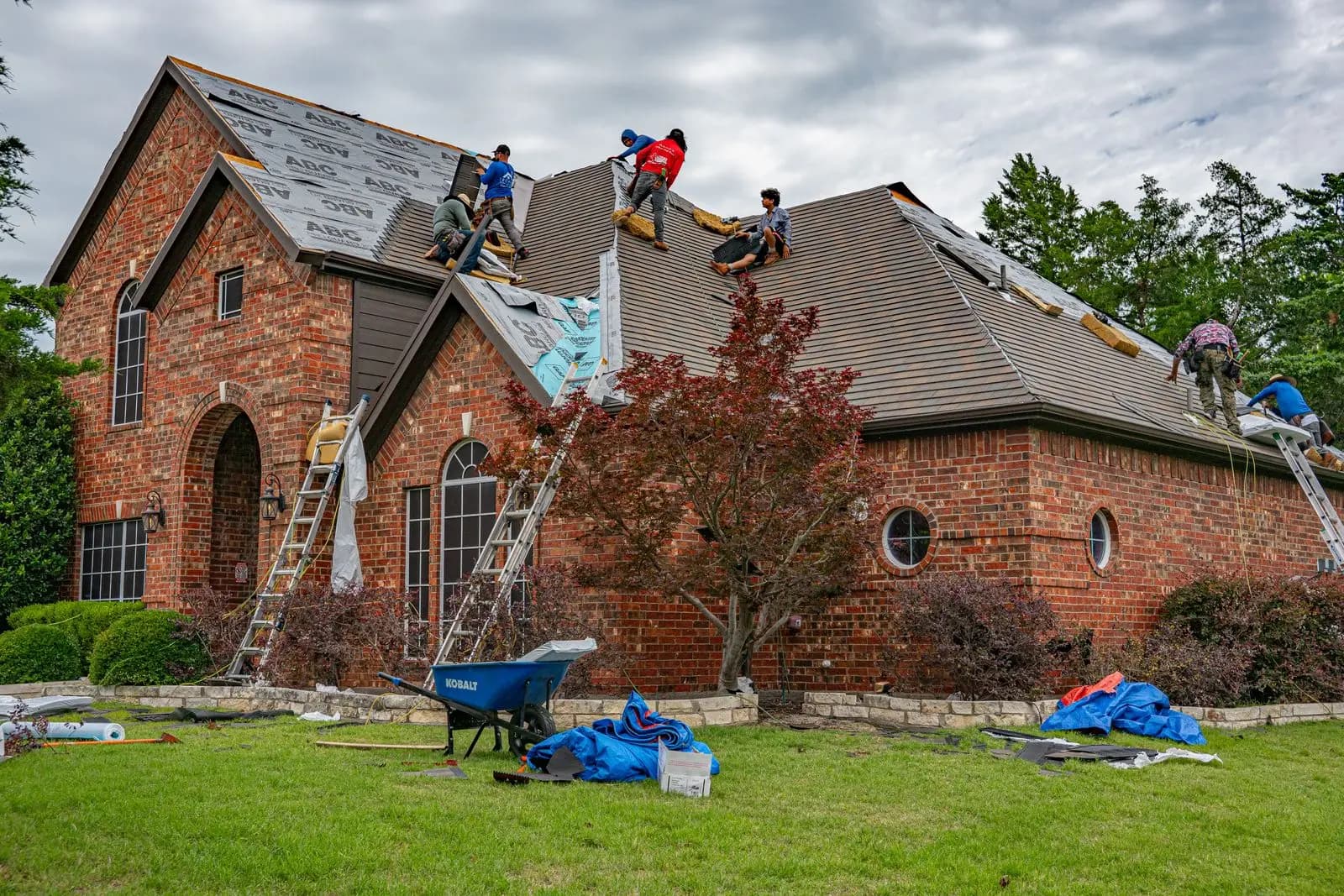
What counts as a roofing emergency
Not every roof problem needs a roofer tonight. An emergency is anything letting water in right now, or anything that could fail before morning. Water moving through decking, insulation and drywall does damage by the hour, so the test is simple: if it is getting worse while you wait, treat it as urgent.
- An active leak during rain, or a ceiling bulging with trapped water
- A hole in the roof from a fallen tree limb or blown-off section of shingles
- A large area of shingles torn off by wind, exposing underlayment or decking
- Flashing torn loose around a chimney or vent where water is pouring in
- A sagging roof section, or a ceiling that looks ready to give way
What is not an emergency
Some roof problems look alarming but can safely wait for a scheduled visit. A single missing shingle with no leak, a small stain that is dry to the touch, granules washing into the gutters, or a roof that is simply old are all worth a prompt inspection — but none of them needs a roofer in the middle of the night. If you are unsure, describe what you see when you call; a straight answer about whether it can wait is part of the job.
What to do in the first hour
Before the roofer arrives, your job is to limit the damage and make the scene safe. Everything here happens inside the house or from the ground — nobody needs to climb onto a damaged roof in bad weather.
- Put buckets and plastic sheeting under drips, and move furniture, electronics and valuables out of the wet area.
- If water is near a light fixture, ceiling fan or outlet, switch off that circuit at the breaker panel and stay clear of the fixture.
- If the ceiling is bulging, it is holding pooled water. Keep people and pets out of the room, then drain it into a large bucket with one small hole at the lowest point of the bulge, standing to the side.
- Photograph the damage from the ground and inside — ceiling stains, wet insulation, anything that came off the roof. Note the date, time and weather.
- If a tree limb is involved, do not try to move it yourself. Check for downed power lines first and call the utility if any are near the roof.
What the roofer does on an emergency call
An emergency visit has one goal: stop more water getting in. The roofer will inspect the damage from the roof only when it is safe to be up there — in high wind, lightning or heavy rain, the first visit may be limited to an assessment from the ground and the attic, with the covering work done as soon as conditions allow.
The usual temporary fix is an emergency tarp secured over the damaged area, fastened so wind cannot lift it. For smaller damage — a torn vent boot, a short run of lifted flashing — the roofer may apply a temporary seal or patch instead. Either way, the work is meant to hold until the roof is dry and safe for a full inspection. Our roof leak guide covers the inside steps in detail if water is already coming through.
How long an emergency visit takes
A straightforward tarping or temporary seal is usually done within a couple of hours of the roofer arriving, once they can safely get on the roof. The bigger variable is the wait for the visit itself: after a widespread storm, every roofer in the area is fielding emergency calls, and the queue is first-come, first-served in most cases. Calling early, and being clear about whether water is actively coming in, helps the dispatcher prioritize. If your roofer cannot reach you promptly, ask for a realistic window and what you should do in the meantime — and get a second number to call if the leak worsens.
What emergency roof repair usually costs
There is no single price for an emergency visit, and anyone quoting a firm number without seeing the roof is guessing. What drives the cost is the size of the damaged area, how steep and high the roof is, whether the work happens at night or in bad weather, and whether decking underneath is rotted and needs replacing too. A small temporary seal is among the least expensive roofing jobs; a large tarp over a steep, multi-story roof costs more because of the safety equipment and crew time involved.
Ask two questions before work starts: what does the temporary fix cost, and will that charge be credited toward the permanent repair? Many roofers roll the emergency charge into the full job. Get the answer and the scope in writing, even for a tarp — a one-page note with the price and what was done is enough. Keep the invoice: reasonable emergency measures to prevent further damage are commonly part of an insurance claim, and our roof insurance claim guide explains how that part works.
What to ask before they start work
An emergency is a bad time to sign a contract, but a few questions now prevent disputes later:
- Is this a temporary fix or a permanent repair, and what happens next?
- What is the total charge for tonight's work, and is it credited toward the permanent repair?
- Will you photograph the damage and give me a written report I can send to my insurer?
- When can you come back for the permanent repair, and what will that involve?
- Are you licensed where my state requires it, and insured? Ask to see proof before work begins.
After the emergency fix: the permanent repair
Once the roof is dry, the roofer inspects the damage properly — shingles, flashing around chimneys and vents, valleys and the underlayment beneath — and gives you a written scope and estimate. A single missing shingle or a cracked vent boot is a straightforward repair; widespread damage, or a roof already near the end of its life, may mean replacement is the honest recommendation. Our guide to repair or replace walks through that decision.
If the damage was storm-related, start the insurance claim promptly — policies set deadlines for reporting, and the adjuster will want to see the damage before the permanent repair changes it. Keep the tarp in place until the repair is scheduled, and check it after any further wind or rain. When the permanent work is done, walk the property, confirm the cleanup and nail sweep, and file the final invoice and warranty paperwork with your claim file.
Questions
How quickly can a roofer get to me in an emergency?
It depends on the weather and how many homes were hit. In normal conditions an emergency call is often answered the same day; after a widespread storm the queue can stretch to days. Call early and be clear that water is actively coming in — that is what dispatchers prioritize.
Can a roof be repaired while it is still raining?
A permanent repair cannot — shingles, sealants and underlayment need a dry surface. A temporary fix like tarping or an emergency seal can be done in poor weather when it is safe to be on the roof, and that is what an emergency visit is for.
Will my insurance cover emergency roof repair?
Most homeowners policies cover sudden damage from wind, hail or fallen trees, minus your deductible, and reasonable emergency measures to prevent further damage are commonly part of the claim. Keep every invoice and photograph the tarp or temporary fix in place.
Is a tarp enough to protect my home until the permanent repair?
A properly installed tarp holds well for days to weeks, which is usually long enough to get through the claim and schedule the repair. Check it after further wind or rain, and do not leave it in place for months — trapped moisture underneath can damage the decking.
Should I call a roofer or my insurance company first?
A roofer. Stop the water first and document the damage, then file the claim. Your insurer will want to see the damage, so photograph everything before repairs change the scene.
This guide is general information, not professional, legal or insurance advice. Follow your insurer's instructions and local codes, and put safety first.