Short answer
Keep everyone safe and stay off the roof. Photograph everything from the ground before anything is moved, contain any leaks inside, get the damaged area tarped, then start your insurance claim and get a roofer's written inspection. Document first, sign nothing in a hurry, and be wary of anyone who knocks on your door demanding a signature.
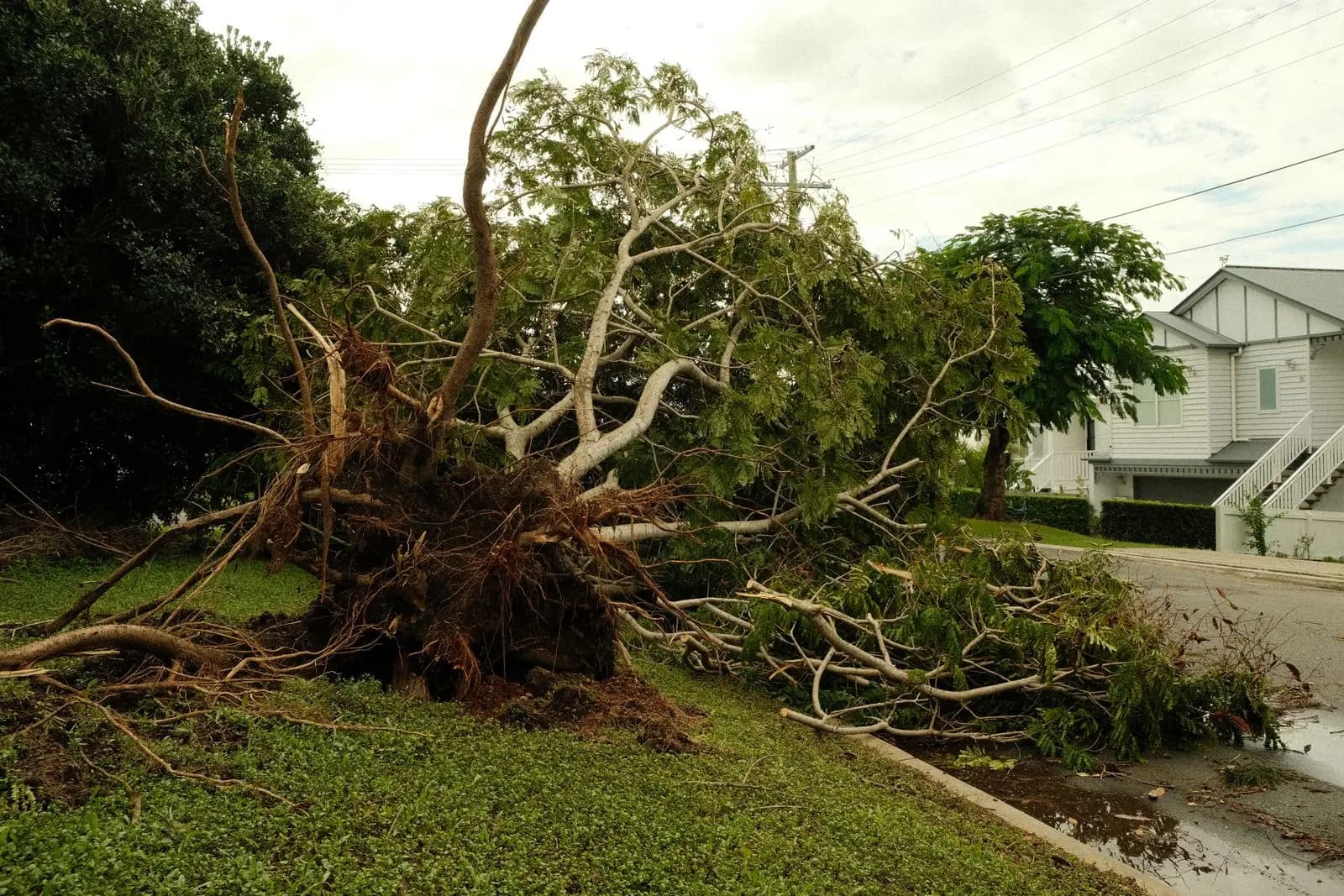
First, make sure everyone is safe
Storm damage is not just a roofing problem. A tree through the roof can involve electrical lines, gas lines and a structure that is no longer sound. If you see a sagging or partially collapsed ceiling, smell gas, or have a downed power line on or near the roof, get everyone out and call the utility or emergency services first — the roof waits.
- Don't climb onto a wet, damaged roof. Wind-lifted shingles, hidden holes and slick surfaces cause falls after every major storm.
- Keep people and pets out of rooms below a bulging or cracked ceiling.
- If water is near fixtures or outlets, switch off that circuit at the breaker panel.
- Watch for nails, broken glass and sharp debris in the yard in the days after.
Document the damage before anything moves
Your insurer will judge this claim largely on records, and the best records are made before tarps, tree services and cleanup change the scene. Note the storm's date and time, then work through the property with your phone:
- Photograph and video the roof from the ground on every side you can reach safely
- Photograph dented gutters, vents and AC fins — they help prove hail size and wind direction
- Photograph interior stains, wet drywall and damaged belongings
- Save shingles, flashing pieces or other debris that came off the roof
- Photograph hailstones next to a coin, if hail is what hit you
Contain leaks and get the roof tarped
Inside, treat an active leak the same as any other: buckets and sheeting under drips, furniture and electronics moved, and a small drain hole in a bulging ceiling emptied into a bucket — our roof leak guide covers the inside steps in detail. On the roof itself, a contractor can install an emergency tarp or a temporary seal even in poor weather, then return for permanent repairs when the roof is dry and safe. Keep the tarping invoice: emergency mitigation is commonly part of an insurance claim, and policies generally expect you to prevent further damage after a loss.
Check the attic and the yard
Once the weather has fully passed, look in the attic from the hatch with a flashlight: wet insulation, daylight where there should be none, and drips marking the real entry points. Walk the yard for fallen shingles and flashing — set pieces aside, because matching the existing material matters for the repair. If the damage was hail rather than wind, the checklist in our hail damage guide will help you read what the storm left behind.
Start the insurance claim promptly
Most homeowners policies cover sudden storm damage — wind, hail, fallen trees — minus your deductible, and they set deadlines for reporting it. File promptly, write down your claim number and the adjuster's name, and ask which deductible applies; wind and hail sometimes carry a separate percentage deductible. Our roof insurance claim guide walks through the adjuster visit, how payouts are calculated, and what to do if the estimate comes back low.
Get a roofer's inspection and a written scope
Before the adjuster visit if you can, have a roofer inspect the damage up close and put their findings in writing with photos. That report tells you whether the damage is likely to exceed your deductible, and it gives you a scope to compare against the insurer's estimate line by line. Ask your roofer to be there when the adjuster inspects — damage on steep or high slopes is easy to miss from a quick look. See storm damage roof repair for what the repair side involves.
Beware of storm chasers
Every major storm is followed by out-of-town crews knocking on doors. Some are legitimate; others vanish once the check clears, leaving work nobody will warranty. Protect yourself:
- Never sign a contract on the spot, and never sign anything that hands over your insurance claim without reading and understanding it
- Be wary of offers to waive or rebate your deductible — that is illegal in some states
- Check for a local address, licensing where your state requires it, and proof of insurance
- Never pay a large deposit before materials are on site and work has started
What happens over the following weeks
Expect two phases. Temporary work — tarping, sealing, tree removal — happens in the first days, as fast as local crews and storm demand allow. Permanent repairs wait on the claim scope, materials and weather, and can run days to weeks out after a widespread storm. If the insurer's estimate misses items, your contractor can file a supplement with documentation. When the work is done, walk the property, confirm the cleanup and nail sweep, and keep the final invoice and warranty paperwork with your claim file.
Questions
Should I climb up and inspect the damage myself?
No. Storm-damaged roofs hide holes, lifted shingles and slick spots, and post-storm falls are common. Everything an insurer or roofer needs from you in the first day can be photographed from the ground and the attic hatch.
How soon do I have to report storm damage to my insurer?
As soon as you reasonably can. Policies require prompt notice and many set a reporting deadline after the date of loss. Reporting late also makes it harder to connect the damage to a specific storm, which is the argument insurers use most in disputes.
Will insurance pay for tarping the roof?
Commonly, yes. Reasonable emergency measures to prevent further damage are usually part of the claim, and policies generally expect you to take them. Keep the invoice and photograph the tarp in place.
A tree fell on my roof. Who do I call first?
If lines are down, the structure looks unsafe or anyone is hurt, call emergency services and the utility first. Then a roofer and, if needed, a tree service — the tree usually has to come off before the roof can be tarped and assessed. Document everything before removal if it is safe to do so.
How long will storm repairs take?
Tarping and temporary sealing often happen within days, depending on how widespread the storm was. Permanent repairs follow the claim process and material availability, so days to a few weeks is realistic after a big event. Get the timeline in writing and be skeptical of anyone promising to start a full replacement tomorrow.
This guide is general information, not professional, legal or insurance advice. Follow your insurer's instructions and local codes, and put safety first.