Storm Damage Roof Repair
Tree damage roof repair
A fallen tree or limb punctures roofing, breaks decking and can crack rafters. The work starts with safe removal, then tarping, then structural repair of what the impact broke. Never climb onto a roof with a tree on it, and stay clear of any tree touching power lines.
- Fast callback on emergency requests
- Independent local roofers that serve your ZIP
- Free to call; the roofer quotes before work starts
Tree impacts are blunt-force damage: shattered shingles, splintered decking, bent flashing and sometimes cracked rafters or trusses. The visible hole is only part of it; the shock can loosen shingles and flashing well beyond the impact point.
Order of operations matters. A tree service removes the tree, or the roofer coordinates with one. Then the roof is tarped so rain stops entering. Then the real assessment happens: decking, rafters, underlayment and roofing, slope by slope around the impact.
This is almost always an insurance claim, and it's usually a straightforward one: sudden, accidental, well-documented damage. Photograph everything before removal, keep the tree company's invoice, and let the roofer document the roof before repairs start. See the parent page on storm damage roof repair for the claim process.
Signs
When tree damage roof repair is the right call
- A tree or large limb resting on the roof
- A visible puncture or hole through the roofing
- Sagging in the roof line where the impact hit
- Interior ceiling damage or leaks below the impact
- Cracked or split rafters visible in the attic
- Shingles scattered well beyond the impact point
Process
What the crew does
- 1
Make it safe
Power lines are checked, and a tree service removes the tree if needed.
- 2
Tarp the opening
The puncture is covered so rain can't get in.
- 3
Assess structure
Decking, rafters and trusses around the impact are inspected.
- 4
Rebuild
Broken structure is repaired, decking replaced, and roofing reinstalled with new underlayment and flashing.
- 5
Document and close
Everything is photographed for the claim, then cleaned up.
Cost
What affects the price
Every job is scoped on site. These are the factors that move the number.
- Size of the impact and structural damage
- Tree removal, usually a separate contractor
- Rafter or truss repairs needing an engineer or permit
- Roofing material matching
- Interior ceiling and insulation damage
FAQ
Tree Damage Roof Repair questions
Who removes the tree, the roofer or a tree service?
Usually a tree service removes the tree, sometimes coordinated by the roofer. Tree removal is generally billed separately from the roof repair.
The tree is touching power lines. What do I do?
Stay away and call the power company first. Nobody should touch the tree or the roof until the lines are de-energized or cleared.
Can a limb puncture be patched, or does the whole slope need work?
Small punctures can be repaired locally if the surrounding structure is sound. Large impacts that break rafters or wide decking areas need bigger rebuilds.
Will insurance cover tree damage to my roof?
Sudden tree damage is typically covered. The claim usually includes the roof repair and sometimes debris removal; check your policy's debris limits.
What if my neighbor's tree fell on my roof?
Your homeowner's policy generally covers your damage regardless of whose tree it was, unless the neighbor was previously warned the tree was hazardous.
Should I trim trees near my roof after this?
Yes. Limbs overhanging the roof should be cut back, and dead or leaning trees near the house should be assessed by an arborist. It's the cheapest prevention there is.
Not quite this? Start from the parent service
Related
Related services
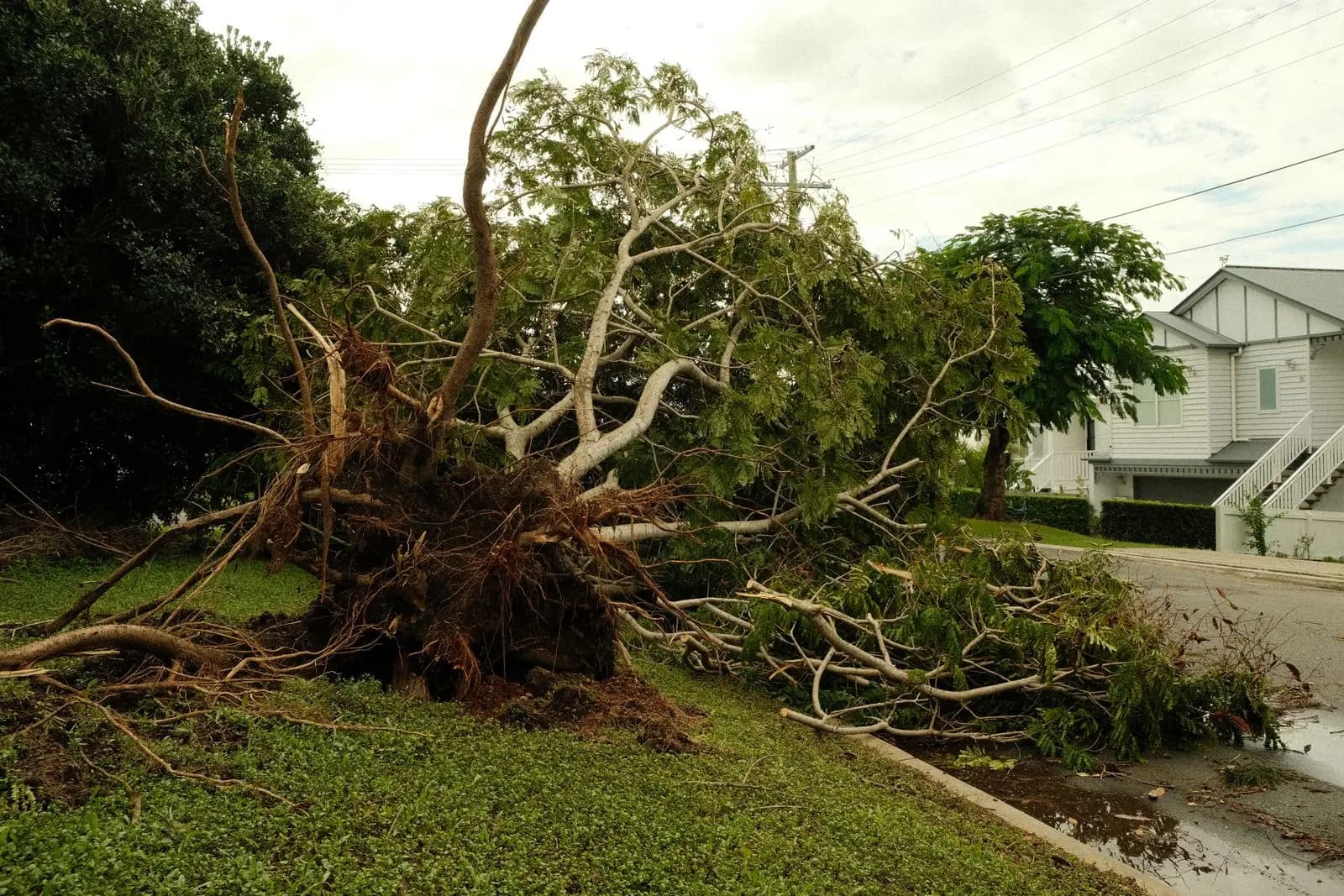
Storm Damage Roof Repair
Storm damage repair starts with stopping water: tarping any openings, then documenting the damage and repairing or replacing what the wind, debris or falling limbs broke.
Learn more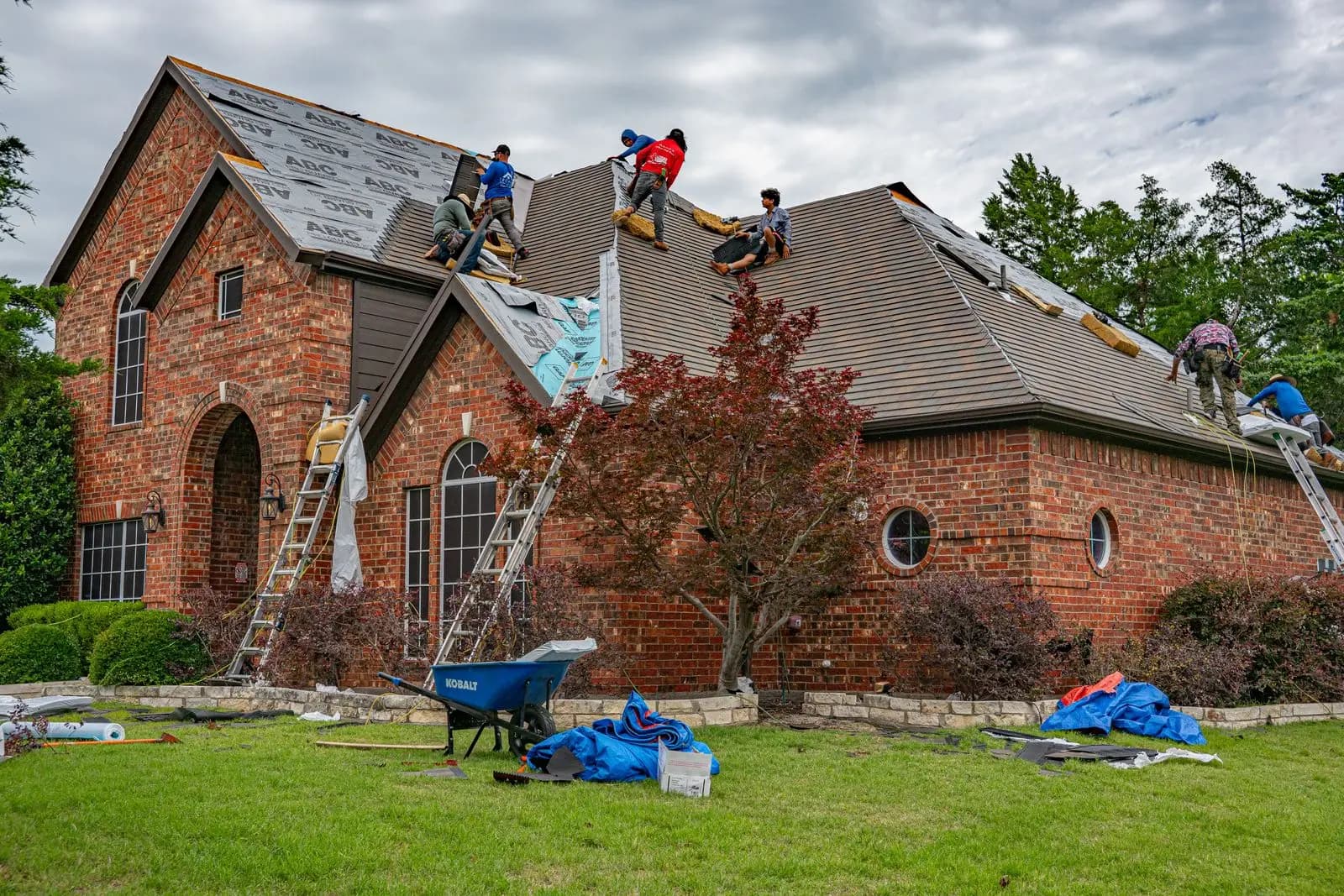
Emergency Roof Tarping
Emergency tarping covers damaged or open areas of a roof with a heavy tarp fastened over the ridge and secured with boards, so rain stays out until permanent repairs are done.
Learn moreRoof leaking or storm-damaged?
Stop the source if you can, then call. We'll connect you with a local roofing contractor that serves your ZIP.
Fast callback on emergency requests