Flat Roof Repair
TPO roof repair
TPO is a white heat-welded single-ply membrane common on low-slope roofs. Its seams are fused with hot air, so proper repairs need a heat welder and TPO material, not glue or tar, and leaks concentrate at seams, flashing and punctures.
- Fast callback on emergency requests
- Independent local roofers that serve your ZIP
- Free to call; the roofer quotes before work starts
TPO's selling point is the welded seam: when done right, the seam is as strong as the sheet itself, and the white surface reflects heat. When done wrong, with a cold weld or contaminated seam, it peels, and that's the most common TPO failure roofers see.
Repairs must match the system. TPO patches are heat-welded with a hot-air welder after the area is cleaned; adhesives and asphalt products don't belong on it. This is specialized work, a general handyman with a caulk gun will make it worse.
Because TPO formulations vary by manufacturer and age, older membranes can be harder to weld as plasticizers migrate out. A roofer should test-weld before committing to a repair plan. If seams are failing everywhere, replacement beats chasing leaks. See the parent page on flat roof repair for that call.
Signs
When tpo roof repair is the right call
- Seams peeling or lifting along weld lines
- Leaks at walls, curbs or drains
- Punctures from foot traffic or dropped tools
- Membrane tenting or billowing in wind
- Cracking or crazing in older TPO
- Flashing pulling away from parapets
Process
What the crew does
- 1
Inspect and test-weld
Seams are checked and a test weld confirms the membrane will take a repair.
- 2
Check insulation
Wet insulation under the failure is cut out and replaced.
- 3
Prep
The repair area is cleaned so the weld bonds to clean membrane.
- 4
Weld patches
TPO patches are heat-welded over failures and re-welded at bad seams.
- 5
Reflash and probe
Details are reflashed, and every weld is probed for voids.
Cost
What affects the price
Every job is scoped on site. These are the factors that move the number.
- Length of failed seams to re-weld
- Wet insulation replacement
- Membrane age and weldability
- Flashing and drain detail scope
- Whether a hot-air welder crew is available locally
FAQ
TPO Roof Repair questions
What is a heat-welded seam?
TPO sheets are joined by melting the overlap with a hot-air welder so the two layers fuse into one. A good weld is stronger than the sheet; a cold weld peels apart.
Can TPO be glued instead of welded?
No. TPO repairs need heat welding. Adhesives don't create a lasting bond on TPO, and asphalt products are incompatible.
Why are my TPO seams peeling?
Usually a cold or contaminated weld from installation, or an aged membrane that's losing weldability. Peeling seams are the number one TPO service call.
How do I know if my old TPO can still be welded?
The roofer does a test weld on a scrap area. If the aged membrane won't fuse, repairs become patches with limited life and replacement should be discussed.
Does the white surface need cleaning?
Dirt reduces reflectivity over time. Periodic cleaning restores most of the reflectivity, but it's cosmetic and energy-related, not a leak issue.
TPO vs. EPDM: which repairs better?
Both repair well when the system is sound. TPO needs a welder and weldable membrane; EPDM needs primers and tapes. The roofer's familiarity with your membrane matters more than the membrane choice.
Not quite this? Start from the parent service
Related
Related services
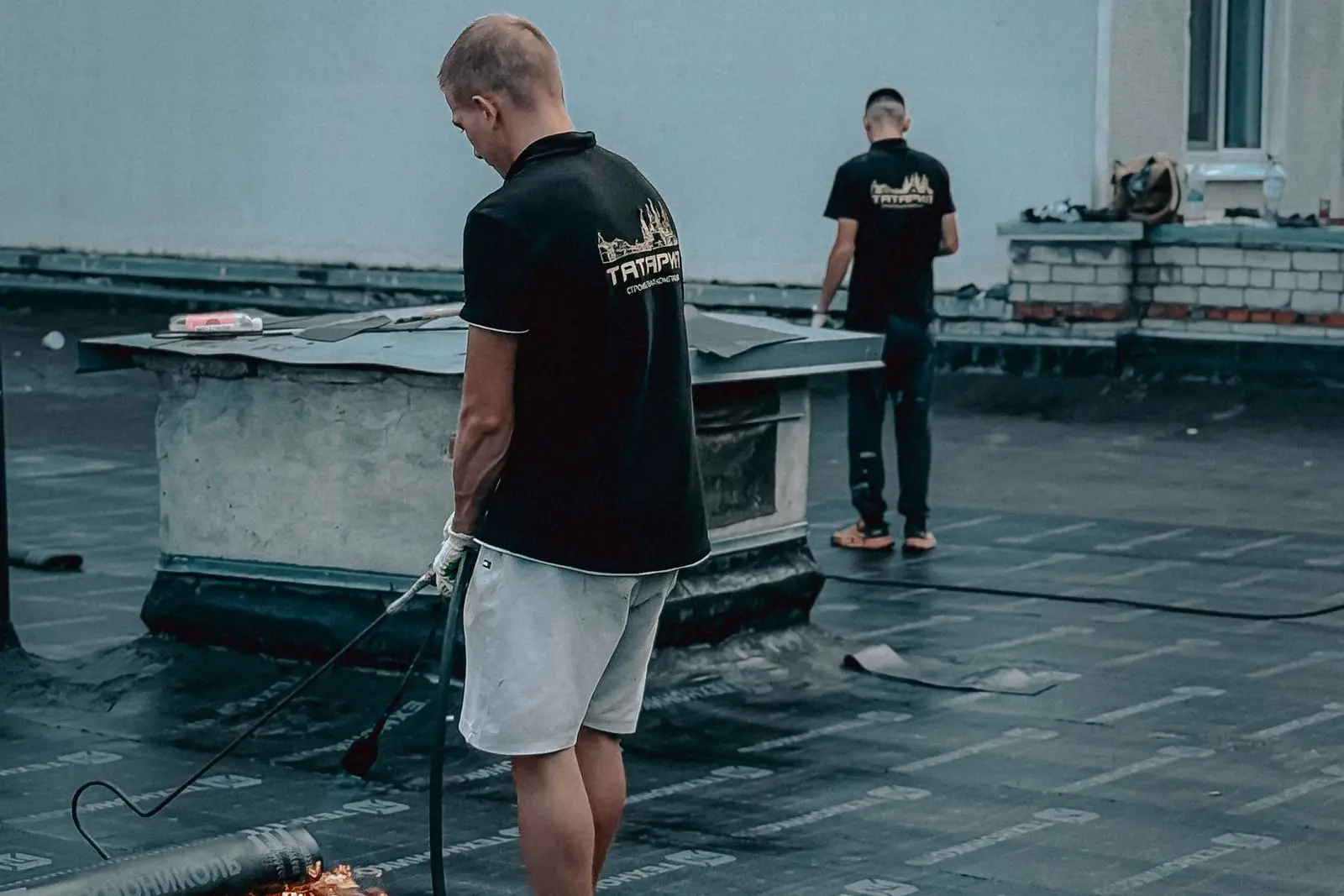
Flat Roof Repair
Flat and low-slope roofs use membranes, such as TPO, EPDM or modified bitumen, instead of shingles.
Learn more
Roof Leak Repair
Roof leak repair means tracing water back to where it actually enters, usually flashing, a vent boot, a damaged shingle or a valley, and sealing or replacing that part.
Learn moreEPDM Roof Repair
EPDM is a black synthetic rubber membrane common on low-slope residential roofs.
Learn moreRoof leaking or storm-damaged?
Stop the source if you can, then call. We'll connect you with a local roofing contractor that serves your ZIP.
Fast callback on emergency requests