Roof Replacement in Rhode Island
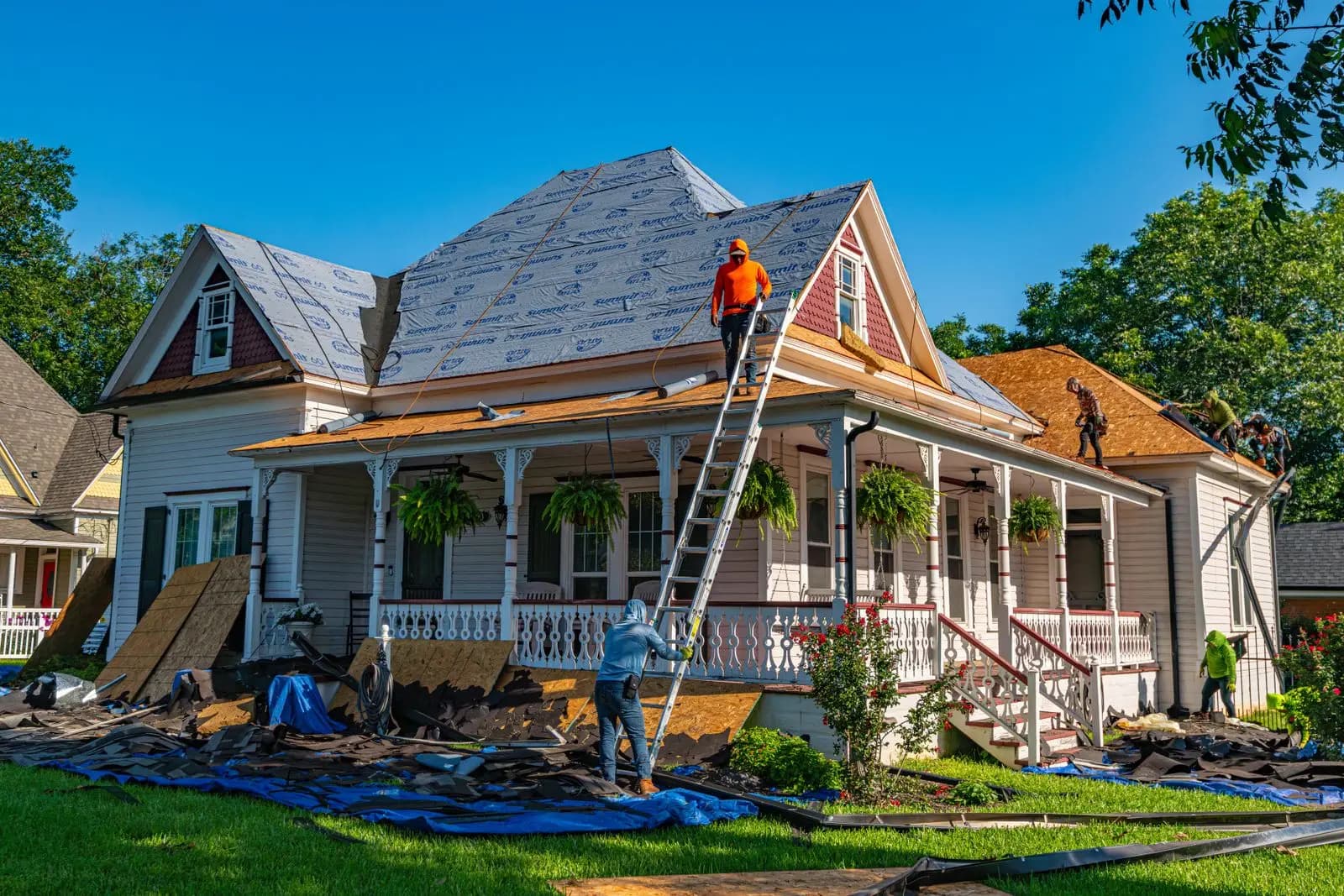
Roof replacement removes the old roofing down to the decking, repairs damaged decking, and installs new underlayment, flashing, ventilation and roofing. In Rhode Island, coastal wind, ice dams and salt air are the conditions that most often lead to this work. GableGuard connects you with an independent local roofer that serves your ZIP code.
- Fast callback on emergency requests
- Network covers 68 Rhode Island cities and 85 ZIP codes
- Independent local roofers; they quote before work starts
Rhode Island conditions
Why Rhode Island roofs need roof replacement
Rhode Island roofs face coastal wind, nor'easters and tropical storms, plus winter snow and ice. Older multi-family homes in Providence and Pawtucket often have low-slope roofs, while shoreline homes need wind-rated materials and careful fastening.
Coastal wind
Hurricanes and nor'easters strip shingles and ridge caps on exposed homes. In hurricane-prone areas, building codes often require specific underlayment, nailing and edge details on a new roof, so confirm the quote follows the local code.
Ice dams
Snowy winters and older attics lead to eave ice dams. A new roof in snow country should include ice-and-water shield at the eaves and valleys, and codes in cold climates often require it.
Salt air
Near the water, fasteners and metal flashing corrode faster. Near the coast, ask for corrosion-resistant fasteners and flashing, and confirm the roof meets local wind-rating requirements.
What's included
How roof replacement works
- 1Estimate and permit. Measurements, material choice and a written contract; the contractor pulls the permit.
- 2Prepare the site. Landscaping is protected, vehicles are moved, and dumpsters are placed.
- 3Tear-off. Old roofing is removed and decking inspected; damaged boards are replaced.
- 4Install. Underlayment, ice-and-water shield, flashing, vents and the new roofing go on.
- 5Ventilation and flashing. Ridge vents, intake vents and all flashing are installed or replaced new, not reused.
- 6Inspect and clean up. Final inspection, magnetic nail sweep and warranty paperwork.
Full roof replacement guide: signs, process and what you can do safely
Warning signs
Signs you need roof replacement in Rhode Island
The local conditions behind most roof replacement calls in Rhode Island are: coastal wind, ice dams and salt air. Check for these first:
- Shingles curling, cracking or losing granules across the roof
- Widespread hail or wind damage
- Neighbors with similar homes replacing theirs
- Multiple leaks or repeated repairs
All 10 warning signs, explained on the roof replacement guide
Before the roofer arrives
What to do first
Safe to do
- Clear the driveway and move vehicles
- Protect items in the attic from dust
- Ask neighbors to expect noise
Stop and call if
- Removing old shingles yourself without fall protection
- Reusing old flashing to cut costs
- Any tear-off or installation work
The full do-and-don't checklist on the roof replacement guide
Permits and licensing
Hiring a roofer in Rhode Island
Rhode Island requires residential contractors to register with the Contractors' Registration and Licensing Board. Permits come from the city or town. Coastal homes may have specific wind requirements in the state building code.
Cost
What affects the price of roof replacement
Every job is quoted on site by the contractor. In Rhode Island, the conditions behind most roof replacement work are: coastal wind, ice dams and salt air. These are the factors that move the number.
- Roof size in squares and number of layers to remove
- Pitch, height and complexity (valleys, dormers, skylights)
- Material: architectural shingles, metal, tile or others
- Decking replacement and ventilation upgrades
- Permits and local code requirements
All cost factors, with detail, on the roof replacement guide
FAQ
Roof Replacement in Rhode Island: questions
Why do Rhode Island homeowners need roof replacement?
Rhode Island roofs face coastal wind, nor'easters and tropical storms, plus winter snow and ice. Older multi-family homes in Providence and Pawtucket often have low-slope roofs, while shoreline homes need wind-rated materials and careful fastening. In hurricane-prone areas, building codes often require specific underlayment, nailing and edge details on a new roof, so confirm the quote follows the local code.
Who does roof replacement in Rhode Island?
Independent local roofing contractors. GableGuard is a free referral service: we connect you with a contractor in our network that covers your ZIP, across 68 Rhode Island cities and 85 ZIP codes. The contractor inspects and quotes before any work starts.
Do I need a permit or a licensed roofer in Rhode Island?
Rhode Island requires residential contractors to register with the Contractors' Registration and Licensing Board. Permits come from the city or town. Coastal homes may have specific wind requirements in the state building code.
How do I check a Rhode Island roofer?
Search the Contractors' Registration and Licensing Board database for the company's registration.
What shingles hold up best near the coast?
High-wind-rated shingles installed with the manufacturer's high-wind nailing pattern, plus corrosion-resistant fasteners and flashing.
What is ice-and-water shield and do I need it?
A self-sealing waterproof membrane applied at eaves, valleys and penetrations. It's required by code in cold climates and cheap insurance anywhere ice dams or wind-driven rain occur.
Roof Replacement in Rhode Island's largest cities
Rhode Island cities we cover
Other roofing services in Rhode Island
Roof Replacement in nearby states
Roof Replacement in Rhode Island
Call and we'll connect you with an independent Rhode Island roofing contractor that serves your ZIP code.
Fast callback on emergency requests