Roof Replacement in North Carolina
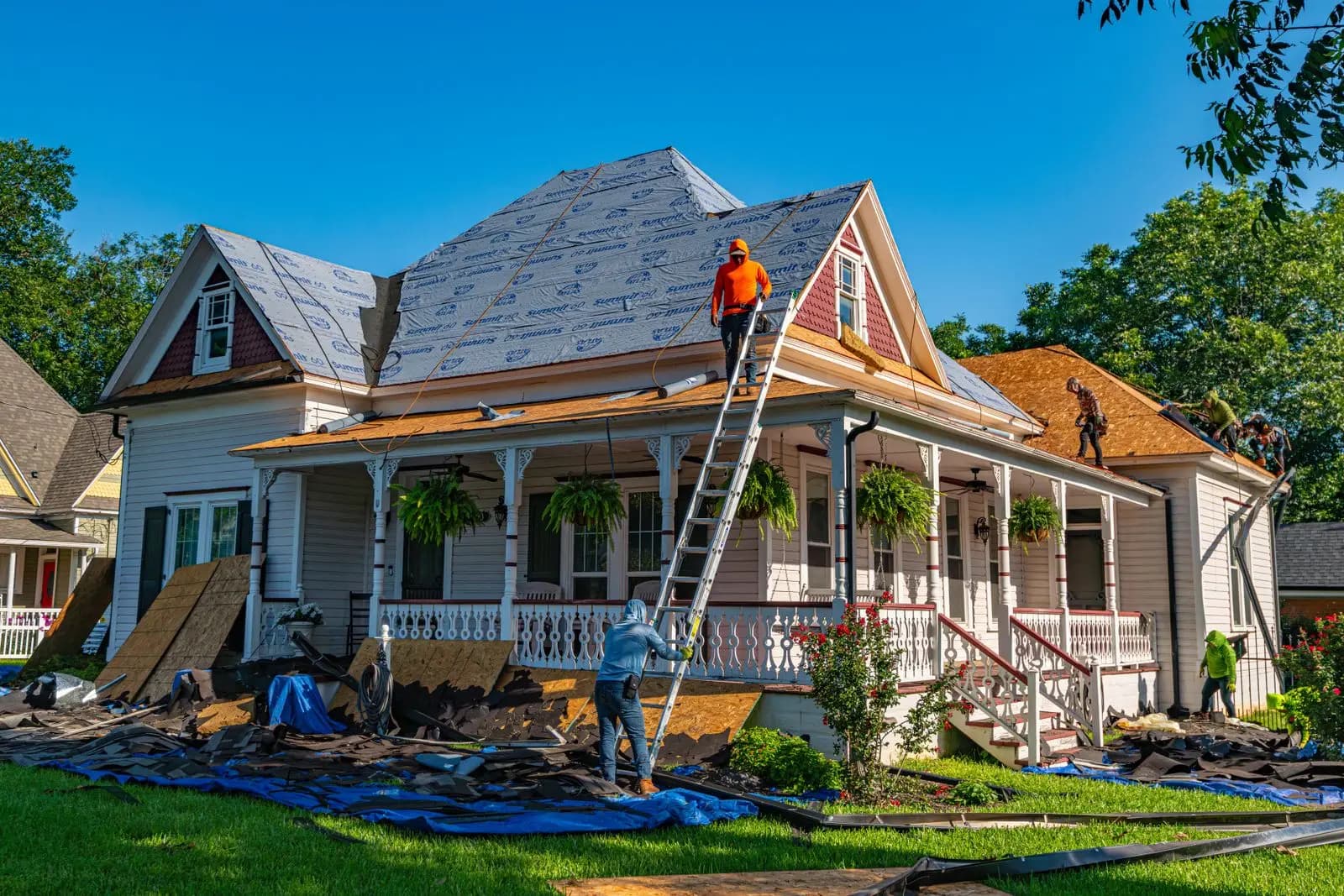
Roof replacement removes the old roofing down to the decking, repairs damaged decking, and installs new underlayment, flashing, ventilation and roofing. In North Carolina, hurricanes, hail and ice storms are the conditions that most often lead to this work. GableGuard connects you with an independent local roofer that serves your ZIP code.
- Fast callback on emergency requests
- Network covers 683 North Carolina cities and 1,001 ZIP codes
- Independent local roofers; they quote before work starts
North Carolina conditions
Why North Carolina roofs need roof replacement
North Carolina roofs face hurricanes on the coast, tropical storm remnants inland, spring hail in the Piedmont and occasional ice storms. Charlotte and the Triangle have large numbers of subdivision roofs from the 1990s and 2000s that are reaching the end of their lives.
Hurricanes
Coastal counties take direct hurricane wind; inland areas get heavy rain and falling trees. In hurricane-prone areas, building codes often require specific underlayment, nailing and edge details on a new roof, so confirm the quote follows the local code.
Hail
Spring storms bring hail to the Piedmont, especially around Charlotte and the Triad. Widespread hail bruising across several slopes is a common reason a roof is replaced rather than patched; impact-rated shingles are worth pricing in hail country.
Ice storms
Freezing rain loads trees that drop limbs on roofs. Repeated wind damage is a sign shingles have lost their seal strips; a replacement with the correct nailing pattern and wind-rated shingles holds better.
What's included
How roof replacement works
- 1Estimate and permit. Measurements, material choice and a written contract; the contractor pulls the permit.
- 2Prepare the site. Landscaping is protected, vehicles are moved, and dumpsters are placed.
- 3Tear-off. Old roofing is removed and decking inspected; damaged boards are replaced.
- 4Install. Underlayment, ice-and-water shield, flashing, vents and the new roofing go on.
- 5Ventilation and flashing. Ridge vents, intake vents and all flashing are installed or replaced new, not reused.
- 6Inspect and clean up. Final inspection, magnetic nail sweep and warranty paperwork.
Full roof replacement guide: signs, process and what you can do safely
Warning signs
Signs you need roof replacement in North Carolina
The local conditions behind most roof replacement calls in North Carolina are: hurricanes, hail and ice storms. Check for these first:
- Widespread hail or wind damage
- Sagging areas in the roof line
- Moss or algae growth that keeps coming back
- Higher energy bills from poor attic ventilation and insulation
All 10 warning signs, explained on the roof replacement guide
Before the roofer arrives
What to do first
Safe to do
- Protect items in the attic from dust
- Take pictures off the walls before the tear-off vibration
- Clear the driveway and move vehicles
Stop and call if
- Any tear-off or installation work
- Helping the crew on the roof to 'save money'
- Removing old shingles yourself without fall protection
The full do-and-don't checklist on the roof replacement guide
Permits and licensing
Hiring a roofer in North Carolina
North Carolina requires general contractors to be licensed by the NC Licensing Board for General Contractors for projects above a set dollar amount, including roofing. Permits come from county or city inspections departments.
Cost
What affects the price of roof replacement
Every job is quoted on site by the contractor. In North Carolina, the conditions behind most roof replacement work are: hurricanes, hail and ice storms. These are the factors that move the number.
- Roof size in squares and number of layers to remove
- Pitch, height and complexity (valleys, dormers, skylights)
- Material: architectural shingles, metal, tile or others
- Decking replacement and ventilation upgrades
- Permits and local code requirements
All cost factors, with detail, on the roof replacement guide
FAQ
Roof Replacement in North Carolina: questions
Why do North Carolina homeowners need roof replacement?
North Carolina roofs face hurricanes on the coast, tropical storm remnants inland, spring hail in the Piedmont and occasional ice storms. Charlotte and the Triangle have large numbers of subdivision roofs from the 1990s and 2000s that are reaching the end of their lives. In hurricane-prone areas, building codes often require specific underlayment, nailing and edge details on a new roof, so confirm the quote follows the local code.
Who does roof replacement in North Carolina?
Independent local roofing contractors. GableGuard is a free referral service: we connect you with a contractor in our network that covers your ZIP, across 683 North Carolina cities and 1,001 ZIP codes. The contractor inspects and quotes before any work starts.
Do I need a permit or a licensed roofer in North Carolina?
North Carolina requires general contractors to be licensed by the NC Licensing Board for General Contractors for projects above a set dollar amount, including roofing. Permits come from county or city inspections departments.
How do I verify a North Carolina roofer?
Use the NC Licensing Board for General Contractors lookup for larger jobs, and ask for proof of insurance on all jobs.
Is there a hurricane deductible in North Carolina?
Many coastal policies use a separate named-storm deductible. Check your declarations page.
Will a new roof lower my insurance premium?
Sometimes, especially with impact-resistant shingles or in wind-prone areas where insurers discount fortified roofs. Ask your agent before you choose materials.
Roof Replacement in North Carolina's largest cities
North Carolina cities we cover
Other roofing services in North Carolina
Roof Replacement in nearby states
Roof Replacement in North Carolina
Call and we'll connect you with an independent North Carolina roofing contractor that serves your ZIP code.
Fast callback on emergency requests